
May 30, 2026
What to expect in your first year of owning a rental property
Nobody tells you about the quiet stretch between closing day and your first rent deposit.
The property is yours. The lease is signed. The tenant is moving in. And then the questions start. Did I set the rent correctly? What do I do if something breaks? How do I know if the property manager is doing their job? Is this normal?
The first year of owning a rental property is rarely as passive as it sounds on paper. It is also rarely as stressful as the horror stories suggest. Most of what feels uncertain in year one is simply unfamiliar. Once you have been through it, the process becomes clear.
This article walks through what your first year rental property experience will likely look like, and how to make the most of it.
The first 30 days: From closing to occupied
The period between closing and your first rent check deserves more attention than most first-time investors give it.
If you purchased a new construction property in Oklahoma City or Tulsa through a builder like D.R. Horton or Lennar properties, the home arrives in move-in condition. There is no renovation phase, no deferred maintenance to address, and no timeline uncertainty caused by contractor delays. Your property manager can begin marketing immediately.
If you purchased a resale property that needed work before listing, this phase involves coordinating repairs, punch lists, and a final inspection before the property goes on the market.
Key tasks in the first 30 days:
– Confirm property management agreement is signed and active
– Verify utilities are set up appropriately for the vacancy period
– Ensure the property manager has all necessary keys, codes, and access
– Review the marketing materials and rental price before the listing goes live
-Set up a dedicated bank account for rental income and property expenses
That last item is worth doing from the start. Mixing rental income with personal funds makes bookkeeping harder at tax time and obscures how the property is actually performing.
Understanding your first lease and tenant
Finding the right tenant is the most important thing that happens in year one. A well-qualified tenant can make the first year simple. A poorly screened tenant can make it genuinely difficult.
Professional property managers handle tenant screening, and that process should include credit history, income verification, rental history, and background checks. If you are working with a reputable manager, this is being done systematically. If you have any uncertainty, ask to see the screening criteria before a tenant is placed.
What to expect once a tenant is placed:
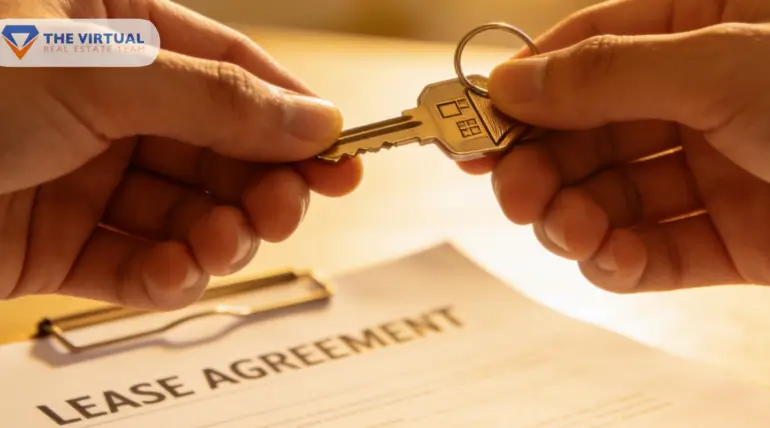
– A signed lease covering all terms, including maintenance responsibilities, pet policies, and late payment procedures
– A move-in inspection report documenting the property’s condition at the start of tenancy
– Your first rent payment, typically arriving on the first of the month after move-in
The move-in inspection is important. It is the baseline document you will reference if there is any dispute about property condition when the tenant eventually moves out. Make sure your property manager handles this thoroughly.
Month-by-month: What your income statement actually looks like
One of the adjustments new investors make in year one is reconciling what they projected against what actually hits their account each month.
Gross rent is not what you take home. Here is what the income side of a typical first year rental property looks like:
– Gross rent collected
– Minus property management fee (typically 8 to 10 percent of gross rent)
– Minus any maintenance costs from that period
– Minus vacancy loss if the unit was empty for any portion of the month
– Equals your net cash flow for that period
Most months, this process is simple. Rent comes in, the manager deducts their fee, maintenance requests are minor, and a distribution hits your account.
Some months are different. A tenant pays late. A repair arises. A vendor invoice comes through that was not anticipated. These moments are normal, and they are manageable. But first-time investors sometimes interpret them as signs that something is wrong when they are simply part of owning real estate.
Building a maintenance reserve from the start reduces the anxiety around unexpected costs. A common target is one to two percent of property value per year. For a $300,000 home, that means setting aside $3,000 to $6,000 annually for potential repairs.
Your first maintenance call
At some point in year one, something will need attention. This is true for every rental property, including new construction.
The nature of that maintenance will vary. New construction properties typically see minor items in the first year: a door that needs adjustment, an appliance warranty claim, a cosmetic issue flagged during a routine inspection. Major system failures are rare in new builds precisely because everything is under warranty and installed fresh.
Resale properties may see more substantive maintenance in year one, which is why building a capital reserve before closing is especially important for that category.
What the maintenance process looks like with a professional manager:
– Tenant submits a maintenance request through the management platform
– Manager evaluates and dispatches an appropriate vendor
– Work is completed and documented
– You receive a maintenance invoice and expense summary in your monthly statement
Your involvement in this process is minimal. That is the design. If you find yourself getting calls directly from tenants or vendors, something in your management structure needs to be corrected.
Taxes in year one:What to know before April
The tax picture for rental property ownership has some favorable elements that first-year investors do not always fully understand going in.
Rental income is taxable, but a number of expenses reduce your taxable income from the property. These typically include:
– Mortgage interest
– Property management fees
– Insurance premiums
– Property taxes
– Maintenance and repair costs
– Depreciation of the property over time
Depreciation in particular is a benefit that surprises many new investors. The IRS allows residential rental properties to be depreciated over 27.5 years, which can offset a meaningful portion of your rental income on paper even when the property is actually cash-flowing.
The specifics of how these deductions apply to your situation depend on your income, your tax filing status, and the structure of your investment. Working with a CPA who has experience with rental property clients is worth doing before your first tax season as an investor.
Evaluating your property manager in year one
Year one is also the period when you calibrate your trust in your property management relationship.
A good property manager is largely invisible in a good way. Rent arrives consistently. Maintenance is handled without drama. Monthly statements are clear and accurate. You are not receiving calls you should not be receiving.
Questions worth asking yourself around the six-month mark:
– Are statements arriving on time and with appropriate detail?
– Are maintenance costs reasonable and well-documented?
– Is the manager communicating proactively when something requires your attention?
– Do vacancy periods, if any, resolve at a pace that reflects a proactive leasing effort?
If the answers are mostly yes, you have a functional management relationship. If something feels off, that is worth addressing directly. A conversation with your manager about expectations is reasonable and appropriate at any stage of the relationship.
VRET helps investors identify property management partners in Oklahoma City and Tulsa who have track records with investor-owned properties and a process that supports remote ownership.
What success looks like at the end of year one
By month twelve, most investors have a much clearer picture of their property than they did at closing.
You know roughly what maintenance looks like for your specific asset. You understand how rent collection works. You have been through at least one tax cycle. You have evaluated your property manager and made any adjustments needed. And you have a full year of income and expense data to use for planning.
Markers of a successful first year rental property experience:
– Occupancy for the majority of the year, ideally the full year
– Monthly cash flow that aligns reasonably with projections
– Maintenance costs that stay within expected ranges
– A clear, organized record of income and expenses for tax purposes
– A property management relationship that is running without major friction
Most investors who have a stable first year go on to acquire a second property. That is how portfolios are built. One property teaches the process. The second is faster. By the third, the fundamentals are second nature.
Why choose the Virtual Real Estate Team
VRET works with investors through every stage of the process, including the first year when the experience is newest and questions come up most often.
Our role does not end at closing. We connect investors with property management partners in Oklahoma City and Tulsa, share resources that support more confident ownership decisions, and stay available as your portfolio evolves.
What VRET investors gain in year one and beyond:
– Access to builder relationships that simplify the acquisition process
– Property management introductions that support remote ownership
– Investor education resources available throughout the holding period
– A team that understands the Oklahoma City and Tulsa markets in detail
– A long-term partner mindset rather than a transaction-focused approach
The first year of owning a rental property is the learning year. Having the right support in place from the start makes it considerably more manageable.
Conclusion
Your first year rental property experience will have moments of uncertainty. Most of them resolve into clarity once you have seen the process play out a few times. The maintenance call that felt alarming becomes routine. The tax season that felt complicated becomes familiar. The property manager relationship that felt new becomes a working rhythm.
What matters most in year one is getting the fundamentals right. The right property, the right management, the right reserves, and the right expectations. When those are in place, the first year becomes the foundation everything else is built on.
If you are preparing to buy your first rental property in Oklahoma City or Tulsa, connect with The Virtual Real Estate Team. Schedule a call to walk through what to expect, review current inventory, and build a plan designed for long-term performance.
FAQS
1. How long does it typically take to find a tenant for a new rental property?
In active rental markets like Oklahoma City and Tulsa, well-priced properties in good condition can be leased within a few weeks. New construction properties with modern finishes tend to attract interest quickly.
2. What should I do if my tenant does not pay rent on time?
Your property manager handles this under the terms of the lease. A professional management company has a defined process for late payments, which typically includes notices and escalation steps if needed. You should not be handling this directly.
3. How much should I budget for maintenance in year one?
For new construction, year one maintenance is typically minimal due to builder warranties. A conservative reserve of one to two percent of property value annually is a reasonable starting point for any rental property.
4. Do I need a separate bank account for my rental property?
It is strongly recommended. Keeping rental income and expenses separate from personal finances simplifies bookkeeping, improves your visibility into property performance, and makes tax preparation considerably easier.
5. How do I know if my property manager is doing a good job?
Consistent communication, timely statements, documented maintenance activity, and stable occupancy are the core signals. If rent is arriving, costs are transparent, and you are not fielding calls you should not be receiving, your management relationship is functioning as it should.Operational Efficiency Is an Invisible Advantage